Archive

Posts Tagged ‘hair transplants’

Hair Pieces, Canada: Why Opt for Natural Hair hair?

May 5th, 2011
Comments Off

Wigs or hair pieces were so popular in the Elizabethan era that if a child ventured out in the dark, he ran the risk of getting his hair forcefully shaven for making wigs! These artificial hair pieces have been around for long and have also been popular choices with men as well as women. However, modern hair pieces in Canada are radically transformed versions of the ones available to mankind in the yesteryears. If you have the ability to choose your options well from the available range of hair pieces in Canada, most often, these will look like an extension of your natural hair. Hence, you can use them to create an impression of lovely, lustrous locks, as and when you please. However, when you buy hair pieces or wigs, it is important to make a well informed choice. Gathering relevant knowledge on the subject could come in especially handy.

Advantages of Natural Hair Pieces, Canada
When you choose to purchase natural hair pieces in Canada, you could either opt for those made of synthetic fiber or natural hair. However, the latter is gaining steady prominence for a variety of reasons. Some of the associated advantages include:

* To begin with, when you opt for wigs that are made from natural hair fiber, they tend to look and feel like the real thing. Although synthetic hair pieces are also close to being perfectly natural, natural fibers definitely have their own charm.
* With wigs made from natural hair, it is easier to maneuver your look as and when you desire. These hair pieces can be treated exactly as you would treat your natural hair. They can be patterned, styled, curled and permed. If you opt for synthetic fibers instead, they will be accompanied by a user’s manual, which will bear instructions pertaining to what you can and cannot do with these hair pieces.
* If you wish to dye your hair, hair pieces made from natural fibers would be the most suitable choice for you. You can dye them as per your wish, without damaging the wig. Synthetic fibers, on the other hand, do not lend themselves to dyeing.

Whether you opt for natural fibers or synthetic ones, it is always a great idea to opt for custom made hair pieces in Canada. These will be made to order and will suit you ideally. However, custom made wigs are far dearer than readymade ones and you should be ready to shell out a hefty amount for that perfect look.

Hair Care, Hair clinic, Hair Loss, Hair Replacement , , , ,

A Few words about FUE

November 23rd, 2010
Comments Off

The technology in the hair transplant field has come along way especially in the last 15 years. The discovery of naturally occurring follicular units, and the ability to use a microscope to dissect hair into follicular units means that a hair transplant can be virtually 100% natural.

The most established follicular unit technology is the strip method. In the strip method, a strip of skin is taken from the back and sides of the head and then dissected into follicular units (grafts) and then placed into the thinning area into small holes. In experienced hands, the results can be spectacular. However, in a small percentage of cases the door scar did not heal well or widened. This led to the idea of transplanting hair into the scar to make it less obvious. The hair was harvested from the back and sides of the head one at a time by using a small punch biopsy so that it would not leave behind a very visible scar. This was the birth of the FUE (follicular unit extraction).

Initially the FUE was designed for small cases where only a few grafts were needed. With the FUE method you cannot see the root of the grafts until it is pulled out of the head. As a result, traditionally there is a high rate of transection which means the root of the follicle is cut and will not grow. This was considered acceptable since only a small number of grafts were needed. Since the FUE method leaves very small scars that are very hard to see, many doctors started promoting the FUE method as an alternative to the strip method.

The FUE has been promoted as a “scarless” surgery. This is not true. It is true that often the scars are so small that a patient can wear the hair very short. The technology for the FUE has evolved and now there are powered drills that help take out larger number of grafts in a more efficient manner. However, for reasons we do not understand, sometimes even when large number of “good ” FUE grafts are planted in a FUE transplant, many will not grow. I am sure that with time the technology will improve.

A word of caution about the FUE. It does leave a scar. If a hair transplant is done using 2000 grafts for example, then the patient will be left with 2000 little scars. This may not be a problem the first time. However, if a patient needs a second transplant with 2000 grafts, then he will have a total of 4000 little scars at the back of his head. This can leave the patient with a “swiss cheese“ look. Furthermore, it becomes more and more difficult to find “good grafts” amongst the scarring in the donor area when the FUE is used. Typically with the strip method one scar is all that is produced no matter how many surgeries.

Recently, a news show showed a new machine that takes out follicular units automatically using the FUE method. This new machine was marketed as being the “latest breakthrough” in hair transplant technology. In fact, the machine has been around for many years and was not considered a reliable method of doing the FUE. I know for fact that the company who makes the machine has improved the technology and that it is now at the 7th generation with the device. This is good news. Myself and other hair transplant doctors are waiting to see how well the machine performs before considering routinely using such as a device.

However, it seems that some doctors are now purchasing the new machine with the intent of performing hair transplants when they have little or no experience performing hair transplants. A hair transplant is a very delicate procedure that takes an entire team of people to perform. It takes a lot of practice and experience to do a good hair transplant.

There are many reputable hair transplant doctors who feel that it is not appropriate for non-experienced doctors to jump on the bandwagon and perform hair transplants because “the machine will do all the work”. If a machine could perform all the technical aspects of a hair transplant, you still need a doctor to plan and design the transplant. You can’t just put hair anywhere! You need to plan for future hair loss. A doctor needs to have the artistic skills produce a natural hairline and understand donor recipient ratios and density gradients. Think of it this way: there are air guns that will put nails into wood boards very quickly and efficiently. However, you wouldn’t let a machine build your house – you still need a contractor who knows how to build a house!

There is a time and a situation where any technology will serve you well. Make SURE you speak to an experienced professional who can offer the right technique for you!

* Additionally you can visit the International Hair Restoration Surgery website (www.ishrs.org) and read their position paper on the FUE method.

Dr. Nelson Ferreira, B.Sc., CCFP, MD
Medical Director, Sure Hair International
2115 Finch Ave. W, Suite 401,
Toronto, M3N 2V6
Tel: 416-747-7873 Fax: 416-747-7441
Email: care@surehair.com

Hair Care, Hair clinic, Hair Loss, Hair Replacement , , , , , ,

Opt For Hair Transplants For A Youthful Look

May 26th, 2010
Comments Off

Hair transplant statistics recorded by GreyHairLoss.com demonstrates a 34% increase in the total number of restoration surgeries related to hair in 2006, as compared to the 2004 figures. In 2006, there were 226,000 hair transplants conducted worldwide, 53% of which was performed in the US.

Society has always regarded hair and hairstyles as a key element of physical beauty. Therefore, the problem of hair loss is, indeed, very stressful for most men and women. Hair loss may occur due to improper lifestyle, poor nutrition, medical conditions or pollution. It can also occur due to hormonal changes and genetics. Whatever the reason, the fact is that 40% of all men face conspicuous hair fall by the age of 35, while 30% of all women experience a similar condition by 60. Hair replacements seem to be the most reliable method of regaining that youthful look and restoring a sense of self worth.

Types of Hair Transplants
There are two methods by which hair transplants are carried out:

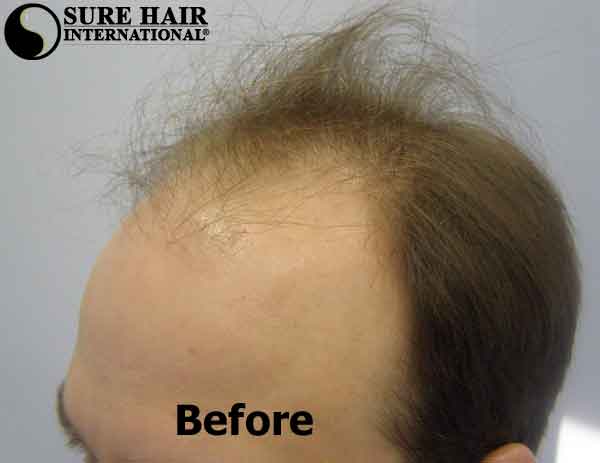
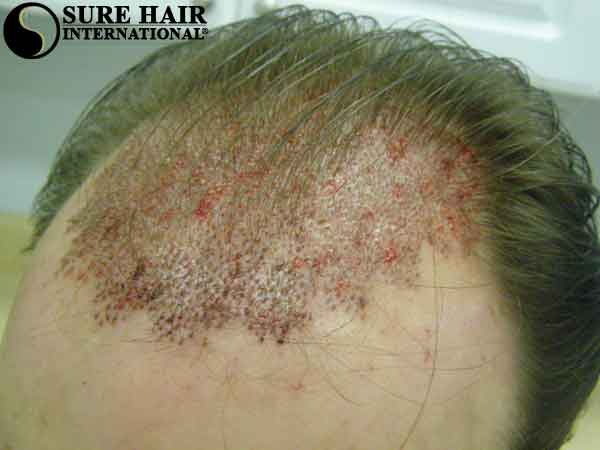
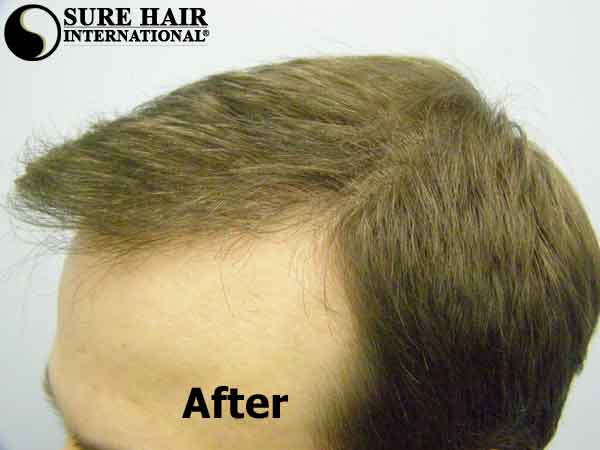
Surgical: Advancing technology has brought about major advancements in the hair transplantation field. Nowadays, high power microscopes allow doctors to remove and replace hair in the way nature had intended. The existing hair is taken out and dissected into naturally-occurring follicular units, which are the anatomical building blocks of natural hair in the scalp. Hair replacement surgeries utilize these units to produce natural results.

The process is conducted by the ‘Uni Strand’ TM Strip method. The hair in the required portion is taped with hair clips; the area (approximately 1/6.30 cm) is covered and trimmed. Hair is left in the remaining portion of the head to allow normal hair styles. A good surgeon will ensure that the hair above the incision envelops the stitches, making the marks invisible. The area is then frozen with local anesthetic and the hair in the donor strip is carefully removed. With a single stitch, the area where the donor strip is taken from is closed. The actual time of incision is less than two minutes.

After this, each follicular unit is separated from the strip and dissected to create the ‘Uni-Graft’. These grafts are refrigerated while waiting for placement in the thinning scalp of the recipient. After this, the new hair can be planted in the donor area.

Non-surgical: This procedure entails the NT system, which perfectly suits those who cannot opt for or prefer not to have transplants. This can be donned as a permanent or semi-permanent accessory. Hair is inserted into the second layer of the skin. The attachment can be adjusted to match up to the ongoing hair loss.
The attachment, in case of a non-surgical procedure, and the stitch, in case of the surgical process, will be indistinguishable if applied by the experts operating at the Sure Hair clinic.

Hair Care, Hair clinic, Hair Loss, Hair Replacement ,